
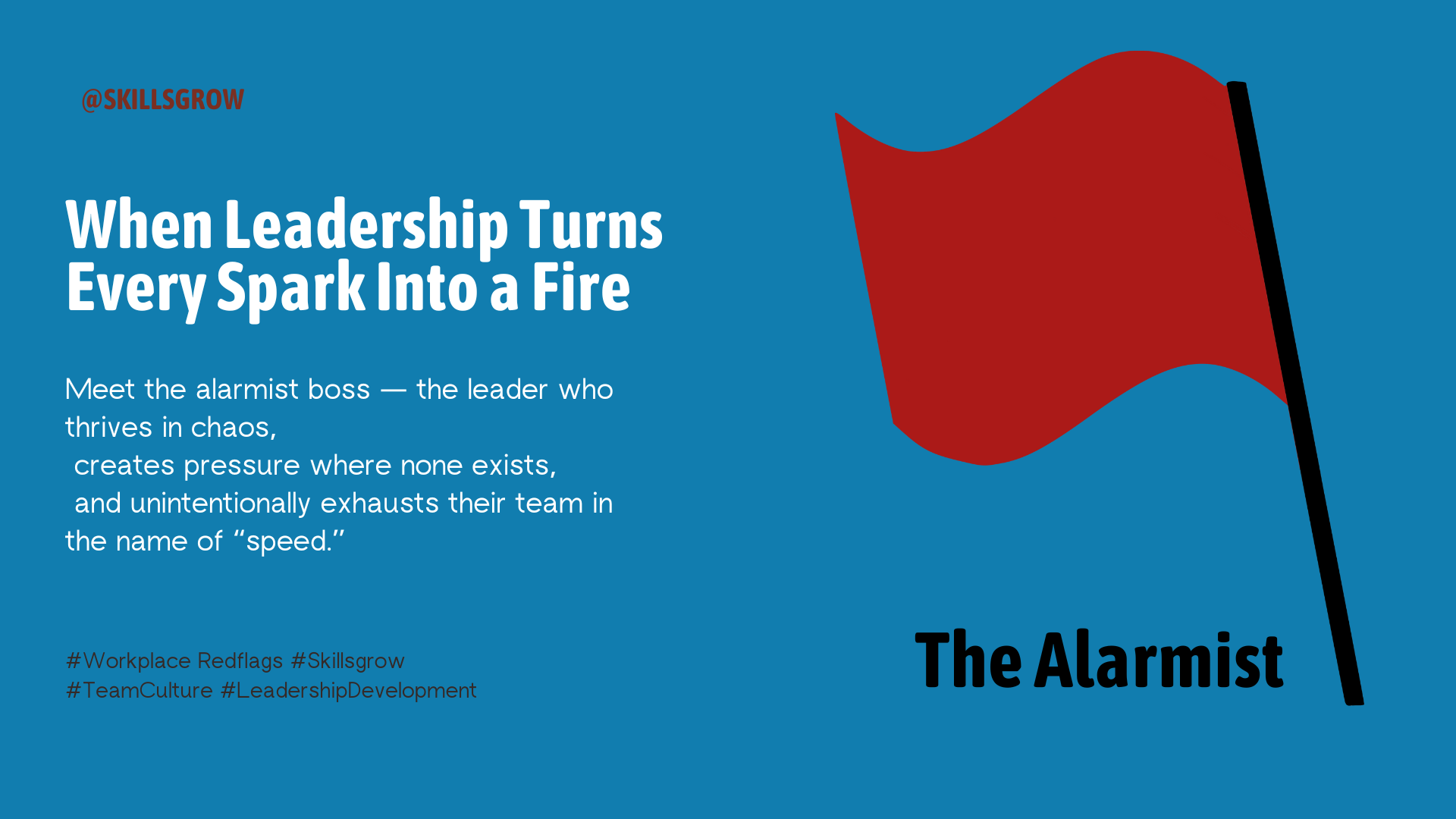
We often talk about red flags in relationships, but rarely about the ones that exist in the workplace — especially those caused by poor leadership behavior.
One of the most damaging and overlooked leadership red flags?
The alarmist boss — a leader who operates in a constant state of panic and urgency, unintentionally draining team morale and creating a toxic work environment.
At Skillsgrow Consultancy, where we help organizations build high-performance teams, we see this pattern more often than most leaders realize.
⚠️ What Is an Alarmist Boss?
An alarmist boss is a leader who mistakes urgency for leadership.
They believe that constant pressure drives results — when in fact, it breeds confusion, fatigue, and disengagement.
This type of leader often shows up as:
- Declaring every task “urgent” or “critical.”
- Calling unnecessary meetings for minor issues.
- Reacting emotionally to small challenges.
- Using fear or pressure to create movement.
At first glance, they appear energetic and committed.
But over time, their style turns into a culture of chaos — where people spend more time responding to anxiety than doing meaningful work.
💣 The Impact on Teams
When every day feels like a crisis, employees stop feeling safe.
A constant state of alarm leads to:
- Burnout – team members are mentally exhausted trying to keep up.
- Poor decision-making – pressure clouds judgment.
- Decreased trust – people begin to hide mistakes instead of learning from them.
- Low productivity – constant interruptions destroy focus.
High-performing employees often disengage first. They crave structure, not stress. And when they leave, the entire system begins to collapse.
💼 How Employees Can Cope
Working under an alarmist boss can be emotionally taxing, but there are ways to protect your mental wellbeing and maintain professionalism.
1️⃣ Set clear boundaries.
Not everything needs an immediate response. Communicate realistic timelines and stick to them.
2️⃣ Anchor your calm.
Don’t absorb their urgency. Model composure — it stabilizes the team.
3️⃣ Keep communication factual.
Panic loses its power when facts are clear. Document updates and clarify next steps.
4️⃣ Protect your energy.
Take short breaks to reset. Your calm is your contribution to team balance.
🧭 How Leaders Can Evolve
Great leaders aren’t perfect — but they’re self-aware.
If you recognize alarmist tendencies in yourself, here’s how to evolve into a calm and effective leader:
✅ Pause before labeling something urgent.
Ask, “Does this truly require immediate action, or am I reacting emotionally?”
✅ Differentiate between urgency and importance.
Speed is valuable only when it’s matched with clarity.
✅ Practice emotional intelligence.
How you manage your own stress sets the tone for how your team handles theirs.
✅ Build trust through predictability.
Consistency is what makes teams feel safe — not pressure.
✅ Empower, don’t control.
When you trust your team with responsibility, they stop waiting for instructions and start owning outcomes.
🌿 The Calm Advantage
At Skillsgrow, we teach that calm is a leadership strategy.
It’s not passive — it’s powerful.
Calm leaders make better decisions, retain better teams, and build cultures where people perform because they want to, not because they have to.
Urgency has its place.
But when everything is urgent, nothing truly is.
A calm leader builds trust.
A panicked leader breaks it.
✨ Final Thoughts
If you’re a leader or HR professional, it’s time to reflect:
- Does your team equate your presence with pressure or with peace?
- Are you driving results through alignment — or anxiety?
Leadership isn’t about reacting to every spark.
It’s about knowing which ones are worth your fire.
At Skillsgrow Consultancy, we help organizations strengthen leadership, improve communication, and build emotionally intelligent teams that thrive under pressure — not panic.
👉 Explore our training programs in Leadership Development, Change Management, and High-Performance Team Building at skillsgrow.co.ke.
2 Responses
It’s fascinating how one person’s constant alarm can shift a whole team’s rhythm.
Sometimes, what we call “urgency” is really anxiety in disguise.
This piece is a timely reminder that calm is also a form of leadership.
This article really unpacks the hidden cost of working with “alarmist energy.”
A great resource for leaders looking to foster calm, clarity, and confidence in their teams.